

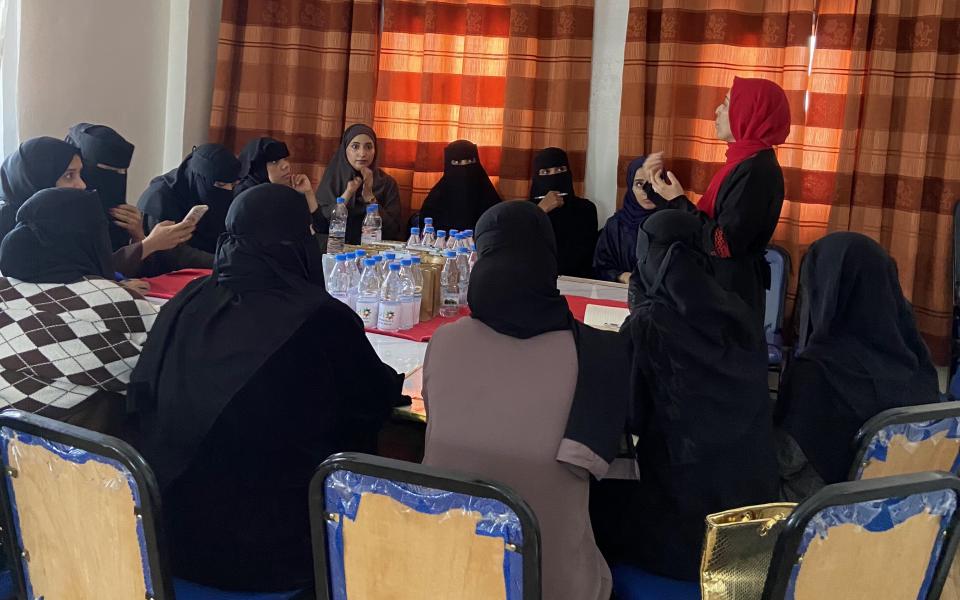
TAIZ, YEMEN – February 5, 2026 – To celebrate World Interfaith Harmony Week, the Spotlight CC, with the support of URI MENA, hosted a groundbreaking event titled "The Harmony Table" (Ma’idat Al-Wi’am) on February 4th at the Mazjan Café in Taiz.
The event brought together a diverse group of 30 women, including entrepreneurs, government officials, activists, members of the marginalized "Muhamasheen" community, and participants with disabilities from the deaf and mute community. This unique gathering sought to transform the principles of World Interfaith Harmony Week—"Love of God and Love of the Neighbor"—into a practical, lived experience.
Cooking as a Catalyst for Peace
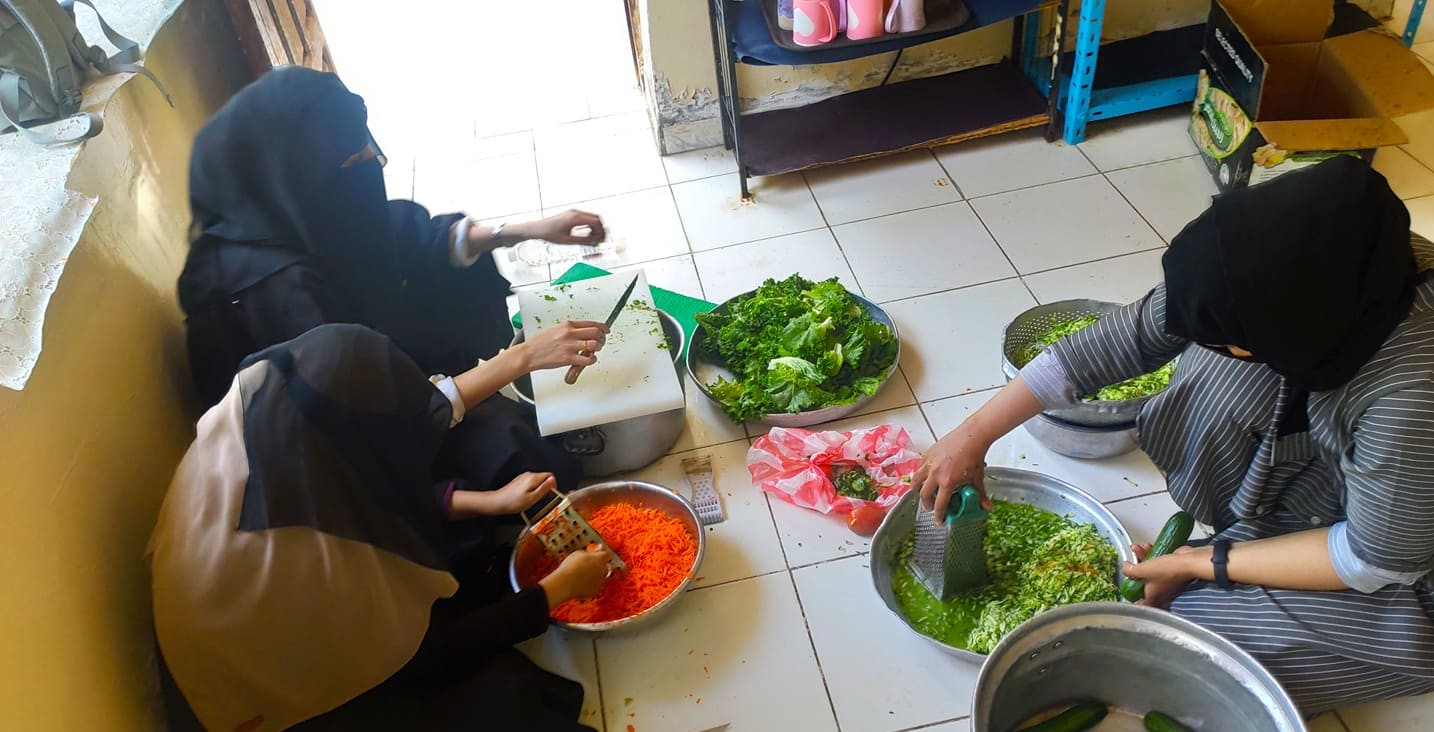
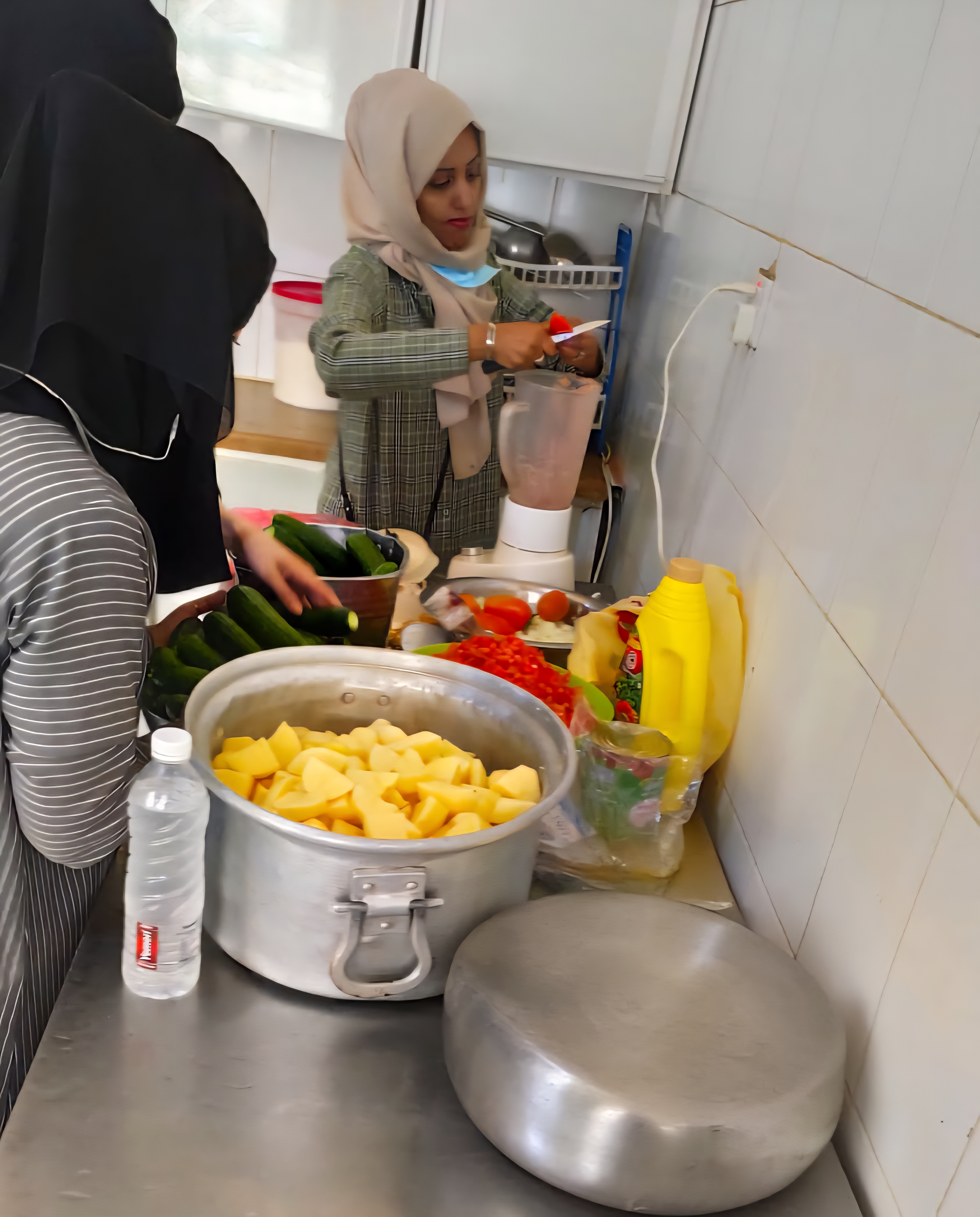
The session utilized an innovative, interactive methodology: participants were divided into three culinary teams—Appetizers, Main Course, and Dessert. As they prepared traditional Yemeni dishes like Shafoot, Zurbian, and Bint Al-Sahn, they engaged in deep discussions about regional variations in customs and the universal values of coexistence.
“We wanted to create a space where diversity is viewed as a strength rather than a challenge,” said Ahlam Al-Maqaleh, the session rapporteur. “By sharing the act of preparing a meal, these women broke down psychological barriers and challenged stereotypes associated with disability and social marginalization.”
Building Bridges and Economic Networks
Beyond the kitchen, the dialogue shifted to a formal session covering five key pillars:
The concept of living in peace with others.
Shared human values as the bedrock of social cohesion.
The link between self-acceptance and accepting the "other."
Women as icons of harmony and peacebuilding.
The vital importance of professional networking among women.
The outcome was a resounding success. Participants moved beyond initial cultural hesitations to form initial professional links, sparking ideas for future joint initiatives between female entrepreneurs and official government sectors.
Lessons in Inclusion
The initiative highlighted that inclusive environments are essential for social progress. Despite challenges—such as the sensitivity of some participants regarding photography and limited time for such rich discussions—the event proved that integrating humanitarian dialogue with practical empowerment yields sustainable community impact.
Looking Ahead
The Spotlight Initiative and URI MENA recommend that "The Harmony Table" model be replicated periodically across other regions. By involving decision-makers in future sessions and documenting this successful pilot, the organizers hope to foster a long-term culture of peace and professional cooperation among Yemeni women.
About the Organizers:
The Spotlight Initiative is dedicated to promoting peaceful coexistence and social diversity in Yemen. URI MENA (United Religions Initiative) is a global grassroots interfaith network that cultivates peace and justice by engaging people to bridge religious and cultural differences.
Event video: https://youtu.be/b7LMZSxnDTU
Testimonies
From a Table of Conversation and Cooking to a Space of Healing and Strength
Taiz, Yemen
“For the first time, I don’t feel the need to hide my hands or justify my disability. I feel accepted and respected as a complete human being.”
These words, shared by Karima, a participant with special needs, captured one of the most powerful moments of a session organized by the Spot of Light for Peace and Development initiative during Global Harmony Week, supported by the Union for Religions Initiative.
What began as a simple gathering evolved into a deeply human space that fostered acceptance, belonging, and genuine connection. Through interactive discussions and the preparation of traditional Yemeni dishes, women from diverse backgrounds—entrepreneurs, government representatives, activists, women with special needs, and participants from marginalized communities—came together in an atmosphere free of labels and judgment.
Another participant, Asma’a, shared:
“Although it was our first meeting, I felt as if I had known everyone for a long time. I did not feel different or excluded—I felt loved and accepted.”
Beyond its emotional impact, the session created valuable networking opportunities, opening pathways for collaboration between women entrepreneurs, government offices, and civil society actors.
The session concluded with the distribution of symbolic gifts, including mirrors and messages promoting self-acceptance and coexistence. As one participant reflected, harmony begins within—through acceptance of oneself—and extends to others through respect and understanding.
“The Table of Harmony” stands as a reminder that women’s empowerment begins with people—when they are seen, heard, and accepted as they are.
Ahlam Al-Maqaleh
President, Spotlight CC
Taiz, Yemen