
A Portrait of Wicca
By H.Ps. Phyllis W. Curott, J.D.
President Emerita, Covenant of the Goddess 9COG).
COG is one of the largest and oldest Wiccan religious
organizations, with members in North America, Europe, and
Australia.
Wicca is a vital, contemporary spiritual path reviving the
ancient, pre-Christian indigenous religion of Europe. It is a
life-affirming Earth religion which is both old and new,
"traditional," and vibrantly creative. Wiccans experience the
Divine as immanent, as embodied in the Universe, the world in all
its aspects and in humanity, as well as transcendent. Therefore all
of life is perceived as sacred and interconnected. Modern Wicca
incorporates ancient and modern liturgy, ritual and shamanic
practices by which people attune themselves to the natural rhythms
of the Earth and the Universe, enabling them to experience
communion with the embodied Divine. Wiccans honor nature as a
profound spiritual teacher and devote themselves to the
contemplation and integration of the spiritual wisdom inherent in
the Earth's cycles of seasonal transformation.
Wicca—known as the Old Religion, Witchcraft, or the
Craft—is derived from the old Anglo-Saxon word
wicce, pronounced "witche," giving rise to the commonly
used but frequently misunderstood term witchcraft.
Wicce meant a practitioner of the Old Religion, and
reflects the influence of the Old Norse word vitke,
meaning a priestess, seer or shaman. The word pagan is from the
Latin paganus, a country dweller. Heathen,
another related term also misinterpreted as a pejorative, meant one
who dwelt on the heath. All were European peoples who, like Native
Americans and other indigenous groups, lived close to the Earth and
respected their relationship to nature as sacred.
Wicca is non-dogmatic. There is no single leader or prophet, nor
is there a Wiccan bible or literature of revealed and absolute
truth. Rather, Wicca is a dynamic and accessible system of
techniques, the mastery of which enables each individual to
experience the Divine personally. Most Wiccans consider their
practice a priest/esshood involving years of training and passage
through life-transforming initiatory rituals. Priestesses and
priests are respected as Elders and teachers of these techniques,
for it is a basic Wiccan precept that each individual has the
capacity and the responsibility to experience the sacred mystery
that gives life true meaning.
It is a Wiccan tenet that spiritual insight is achieved through
living in harmony with the Earth. Like the spiritual worldview and
practices of Native Americans, Taoists and many indigenous Earth
religions, Wiccan spiritual practices are intended to attune
humanity to the natural rhythms and cycles of nature. Rituals
therefore coincide with the phases of the moon, which are
particularly significant for women, and the seasonal changes.
Wiccans seek to live in a balanced way with nature and to practice
their spirituality not only in sacred rituals but in the way they
live each day. Thus the Divine is experienced not only in prayer,
meditation, ritual, and shamanic work, but in gardening, preparing
a meal, recycling trash, making love, giving birth, and growing
old. Divine presence is felt in the air we breathe, the water we
drink, the food upon our tables, the creatures and plants with
which we share this beautiful planet, and the sacred Earth that
nourishes and sustains us.
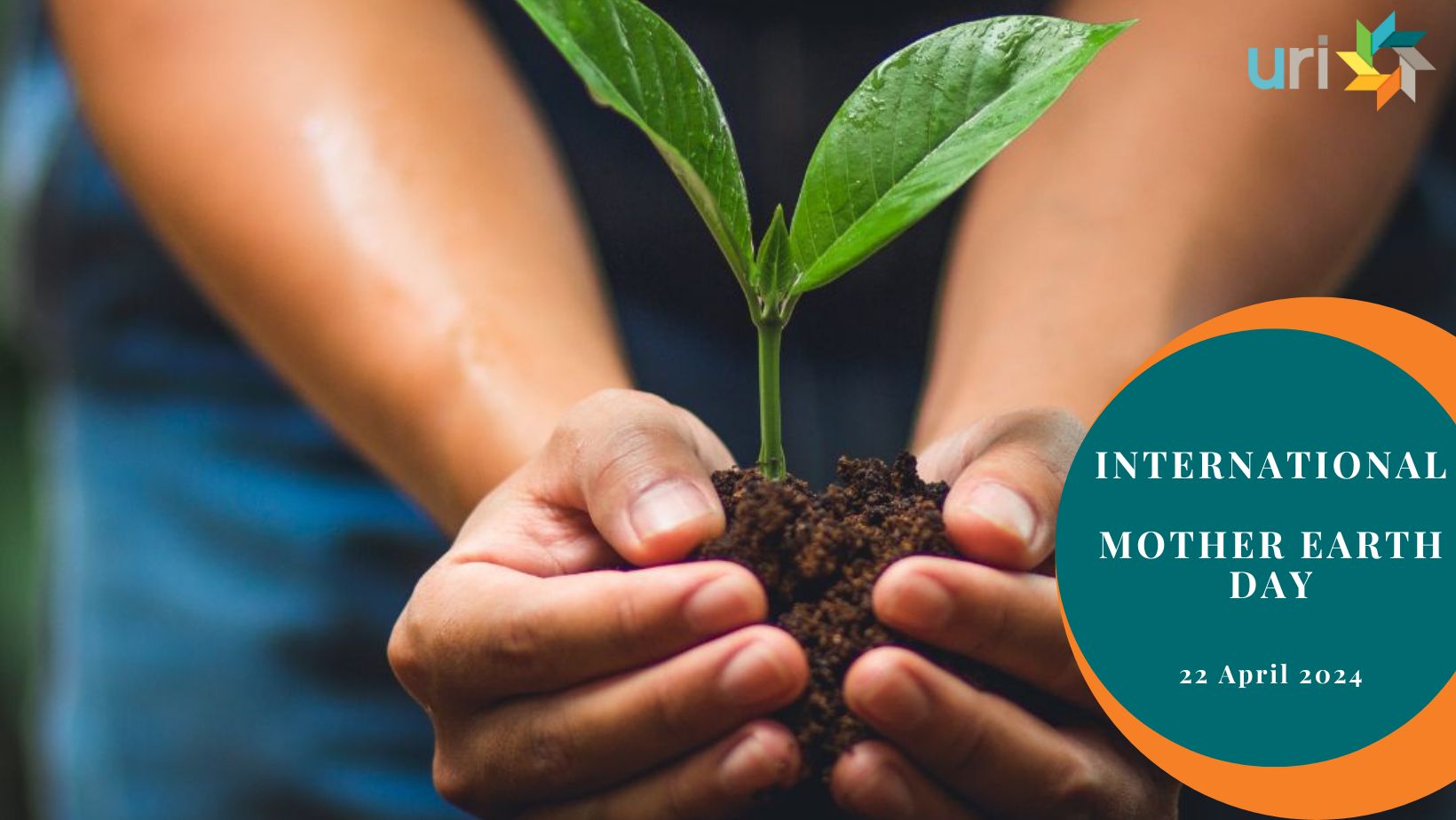
Our reverence for the Earth expresses our reverence for the
Divine which it embodies and reflects a deep ecological concern
which is more than pragmatic. As an embodiment of the Divine, the
Earth is not treated as a utilitarian object, to be exploited,
polluted and destroyed for man's short-term greed. Rather it is
inherently sacred in its value. This fundamental respect for the
Earth as sacred has drawn many people to the practice of Wicca and,
like other indigenous religions, may be one of its greatest
contributions to a world imperiled by ecological crisis.
The Divine is also perceived and experienced anthropomorphically
as well, though there is great diversity among Wiccans as to
whether they characterize the Divine as exclusively feminine or as
a multiplicity or dyad of feminine and masculine forms and
metaphors. In contrast to most of the world's religions, Wicca
acknowledges the Divine as feminine as well as masculine. The
Goddess, who is seen as both transcendent and immanent, is an
essential aspect of Wiccan worship. She may be worshipped as the
nameless single Goddess, or as any of the many aspects and names by
which She has always been known. Personified as the Triple Goddess,
the Great Mother, Isis, Gaia, Demeter, Cerridwen, Brigid, Oestara,
Innana, Ishtar, Shekinah, Shakti, Kali, Amateratsu, and many
others, the Divine feminine is also experienced in the energies of
the Universe, the mysteries of the moon, the blessings of the
Earth, and the wonders of our own bodies, which like the Earth
itself are held to be sacred. This honoring of the Divine in its
feminine aspect, as well as the genuine respect for women as
spiritual leaders, wise women and healers, has been a primary
reason for the rapid growth in popularity of Wicca among women.
According to the Institute for the Study of American Religion (U.C.
at Santa Barbara), Goddess spirituality, to which Wicca is a
venerable contributor, is the fastest growing religion in
America.
Wiccans have one fundamental ethical precept: "An (if) it harm
none, do what you will." This honors the great freedom that each
individual has to ascertain truth, to experience the Divine
directly, and to determine how to best live her or his own life.
With that freedom, however, comes a profound responsibility that
none may be harmed by one's choices and actions. As in many
religions, individual Wiccans reach different conclusions when
applying these fundamental precepts to such issues as
vegetarianism, abortion, or participation in war.
Wiccan spiritual practices, often referred to as "magic," are in
fact ancient techniques for changing consciousness at will in order
to better perceive and participate in Divine reality. A primary
purpose of Wiccan techniques is the transformation of the self to
fully develop one's gifts and capacities to live a full, joyful,
and spiritual life. In this sense, they are also used for practical
ends such as healing, divination, purification, blessing, and the
raising of energy to achieve positive life goals such as fulfilling
work and relationships. All of these techniques, which may include
prayer, meditation, ritual, drumming, singing, chanting, dancing,
journeying, trance, and others, require and engender wisdom,
maturity, patience, passion, and an abiding commitment to the
sacred.
The "casting of a spell," frequently misunderstood as a means of
having power over people or nature by the use of supernatural
forces, is actually a form of ritual and meditation which is very
similar to prayer in other religions, except that, instead of
beseeching the aid or intervention of an external deity, the
indwelling Divine energy is drawn outward into manifestation in the
world through harmonious interaction with the Divine presence
already present. The idea of controlling and having dominion over
nature or others is alien to Wiccan cosmology. Wiccans do not work
with supernatural powers nor do they seek to have "power over." The
essence of Wiccan spirituality is respect for and attunement with
the natural energies of the Earth and the Universe as a means of
attuning oneself with the sacred. It is unethical to engage in any
form of spiritual work which seeks to control, manipulate or have
power over others. While work may be done on behalf of another,
such as healing which is an important and ancient aspect of Wicca,
even this is never done without the knowledge and consent of the
person who is being assisted.
There are many different traditions or denominations within the
Old Religion. Some reflect the particular practices of certain
ethnic groups such as Celtic, Norse, Welsh, Greek, Italian,
Finno-Ugric, Lithuanian, etc. Some are part of the initiatory
traditions made public by such practitioners as Gerald Gardner.
Still other practice with the guidance of liturgical works
published and taught by contemporary Wiccans. Some practitioners
search within themselves for inspiration and direction or work
creatively in groups in a mutually agreed upon group structure.
Some traditions are practiced by women only, others by men only,
and many include both women and men. Some traditions may date back
for hundreds of years or more, and others have been in existence
for only a few years.
Whether carrying on the spiritual vocabulary of an ancient
lineage or drawing forth the highest creative and spontaneous
expression of a single individual, the great strength of Wicca lies
in its diversity and vitality—it is a living, growing
religious tradition.
|