
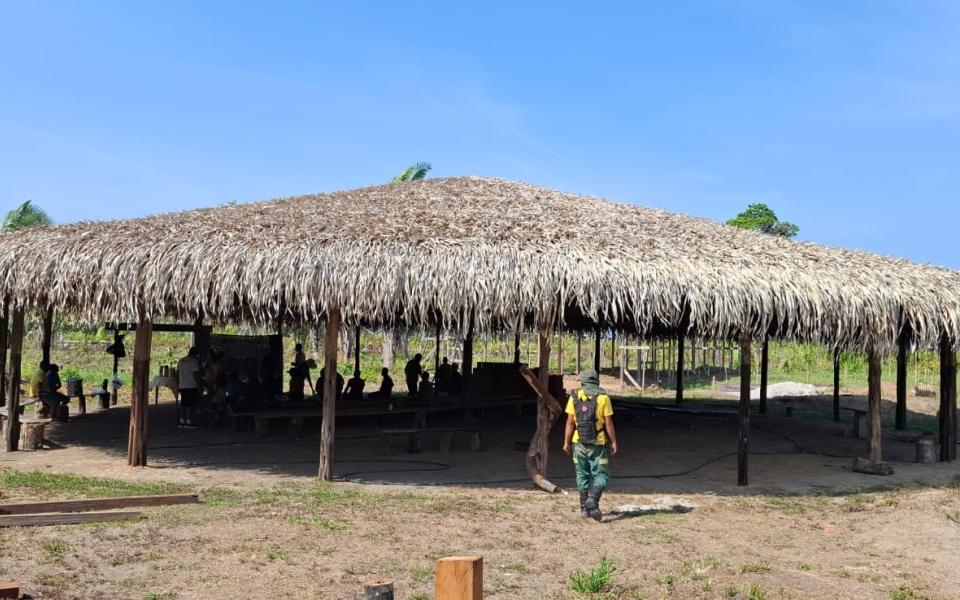
Nova Olinda do Norte, Amazonas — Reaching this location takes about ten hours by boat from Manaus, the Madeira River up. On September 5—Amazon Day—this riverside town became the stage for what organizers describe as the first interfaith and cross-sector dialogue of this scale to reach the Madeira River basin: the "Faiths and Lives: Connections Between Knowings and Perspectives in the Amazon" Colloquium.
The gathering was organized by the Amazonizar (To Amazonize) Network—an ecumenical and interfaith network acting as the URI Cooperation Circle in the Amazon—and co-organized by the Graduate Program in Religious Studies at PUC-Goiás (PPGCR/MINTER). The event, hybrid and for free, took place in two venues throughout the day: the City Council Auditorium during the morning and the Lírio do Vale Municipal School in the afternoon. Indigenous leaders, riverine communities, religious leaders, educators, and municipal officials shared a space usually reserved for other matters.
Two panels structured the morning session. The first focused on caring for our Common Home, featuring international voices from four countries besides Brazil. Rev. Lauren Van Ham, URI’s Earth Restoration Coordinator, spoke from the United States, and Dr. Enoé Texier, URI Coordinator for Latin America and the Caribbean, from Venezuela; SICSAL (the Óscar Romero International Christian Service of Solidarity with the Peoples of Latin America) brought representatives from Canada and Colombia. All four participated remotely, their voices filling an auditorium built for city council sessions rather than international gatherings.
The second panel ventured into more sensitive territory: the secular nature of the State, eco-spirituality, and the fight against religious racism in the Amazon. Lawyer and human rights activist Dr. Elianildo Nascimento, URI Global Trustee and founder of URI Brasília, discussed the legal protections and the gaps affecting religious minorities. Joining him were professors Renato Souza and Afonso Murad, along with journalist Jane Vasconcelos from IRI Brazil.
Throughout the morning—and during breaks between the afternoon workshops—IRI Brazil promoted, with an across-the-board approach, the launch of the "Campaign for the Right to Breathe Clean Air, Access to Potable Water, and Climate Security," alongside a virtual immersion experience in the Amazon using 360-degree virtual reality headsets and glasses.
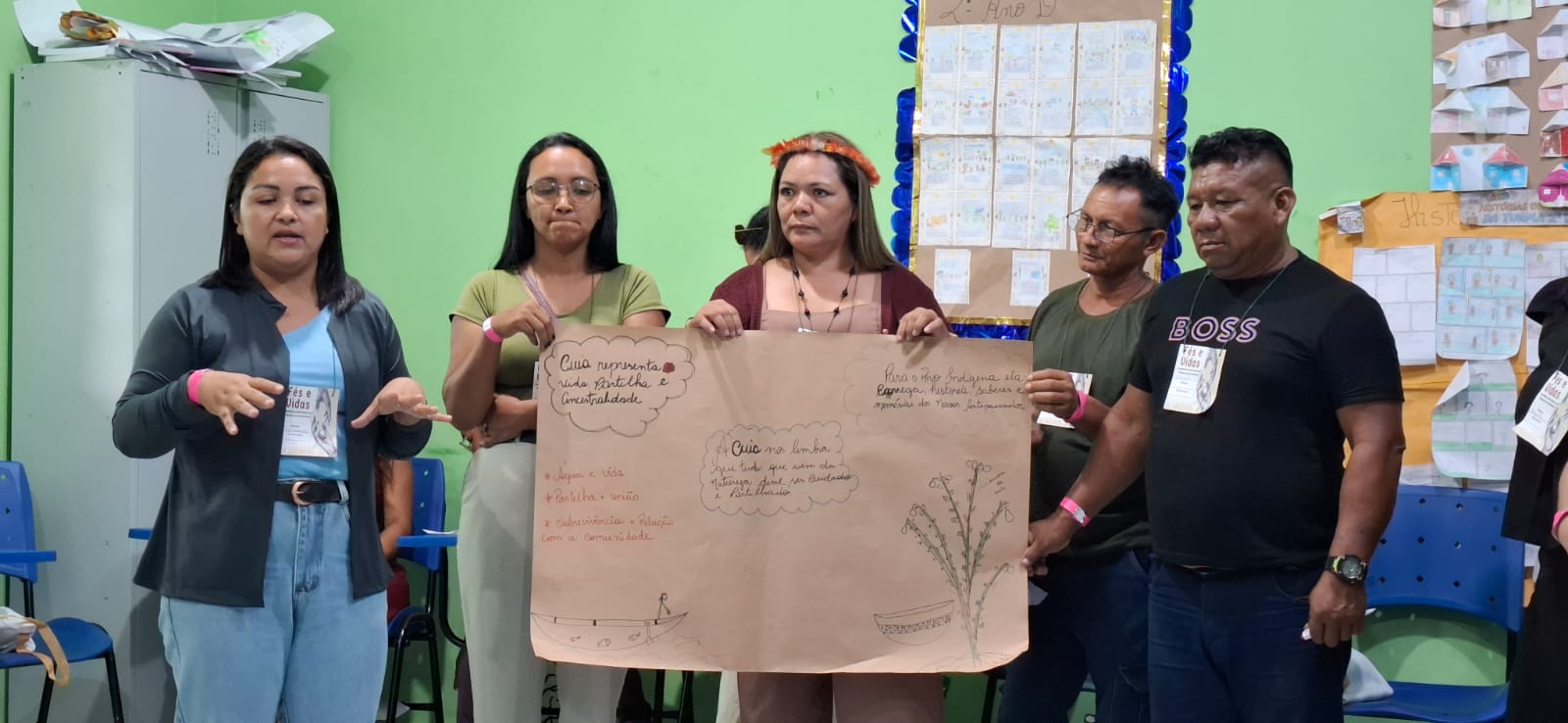
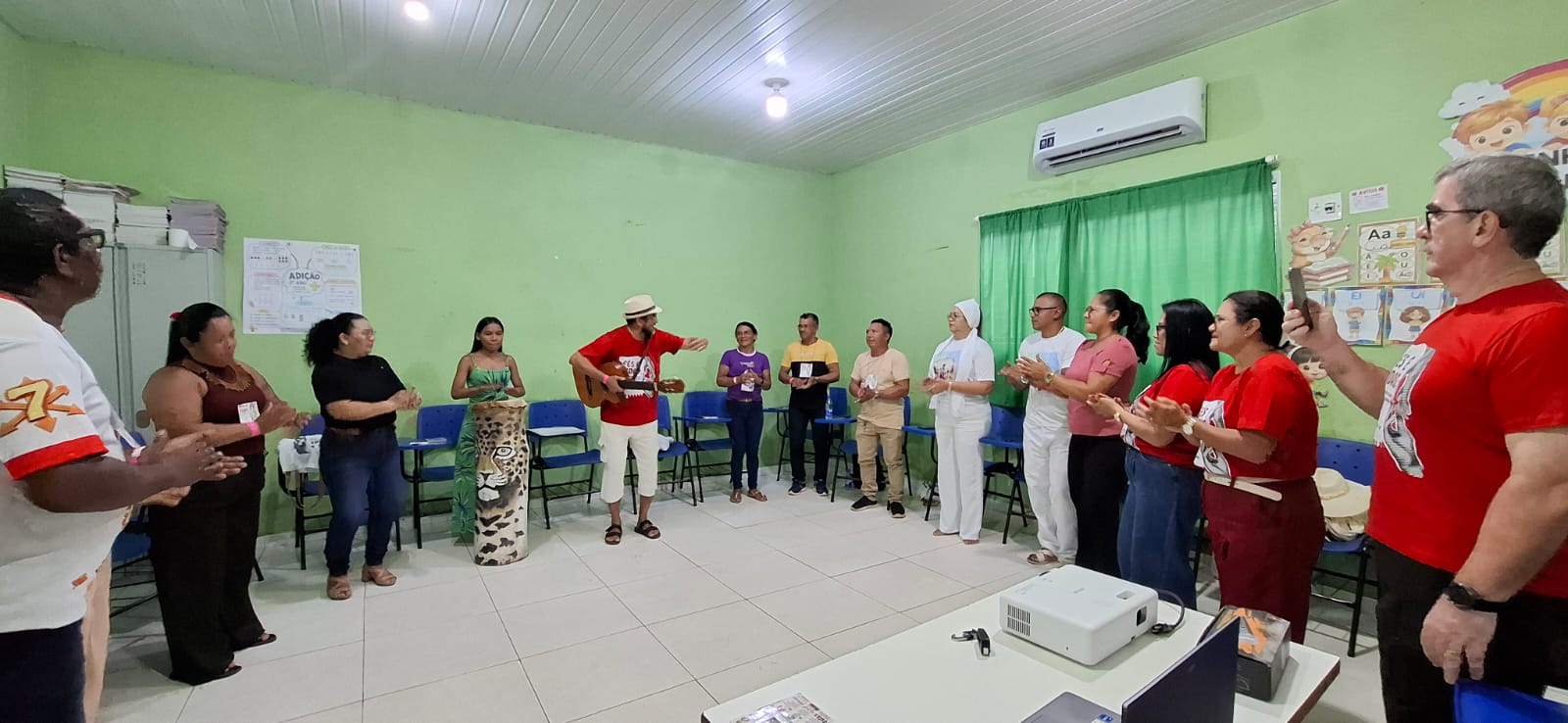
In the afternoon, the morning's content transitioned into simultaneous workshops at the Lírio do Vale Municipal School. Led by master's students from PPGCR/PUC-Goiás, these sessions targeted three distinct groups: local and regional religious leaders, Indigenous and social leaders, and educators—with the municipal Secretary of Education also in attendance. The Indigenous leaders present throughout the day represented three peoples from this region of the river: the Mura, the Mundurukú, and the Maraguá.
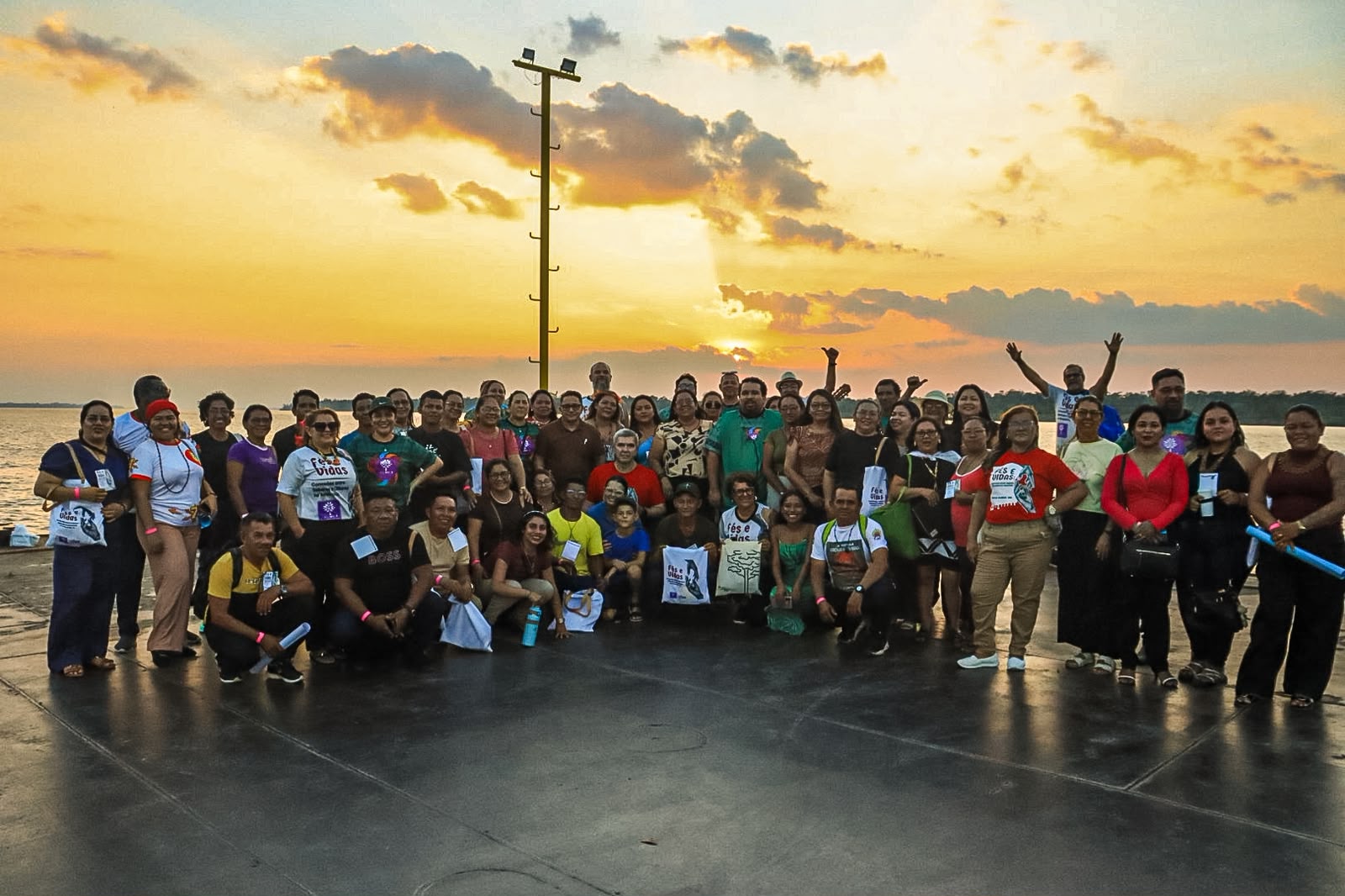
During the day, as part of a cultural break, a group of young Maraguá women performed ancestral music for the audience. At dusk, the same group performed again—this time on the banks of the Madeira River—to open the Symbolic Act in Defense of the Amazon.
The event also featured music by Professor Rosângelo Fernandes and culminated in the collective signing of the Madeira River Declaration, a document summarizing the commitments made during the colloquium. Like much of the Amazon basin, the river being defended has faced mounting pressure from illegal mining in recent years.
"This is the first time a dialogue of this caliber has reached the Madeira River corridor, and it arrives in a way that can be understood by everyone, not only specialists. That is what makes Amazon Day different here this year—as a path that moves forward and help us to keep hoping," stated Rev. Iuri Lima, coordinator of the Amazonizar Network and a cleric of the Anglican Episcopal Church of Brazil.
The dialogue extended beyond the scheduled program. The following morning, researchers from PUC-Goiás and Rev. Iuri Lima were welcomed—without prior planning—to the Mura Village on the Curupira River, at the invitation of local leader Tuxaua Elson Mura. Members of AMARN (Association of Indigenous Women of the Upper Rio Negro) joined a community breakfast that took the spirit of the colloquium a step further, bringing it directly into the territory the event sought to honor.
The colloquium was organized by the Amazonizar Network, co-organized by PUC-Goiás/PPGCR-MINTER, and supported by CESE, URI, SICSAL, IRI Brazil, the Marist Network, UniLaSalle Manaus, AMARN, and the City Hall and City Council of Nova Olinda do Norte.
For a Cooperation Circle working at the edges of the global URI network, the day put to the test an idea the organization has long held—that interfaith dialogue belongs not only in cities and conference centers but also on riverbanks, where the future of the Amazon is actually being decided.