
“We listen and speak with respect to deepen mutual understanding and trust.” - URI Principle 5
URI Cooperation Circles must include members of at least three different religions or traditions. By engaging in respectful conversations, members learn, share and build bridges of understanding.
Examples of our work in this Action Area:
-
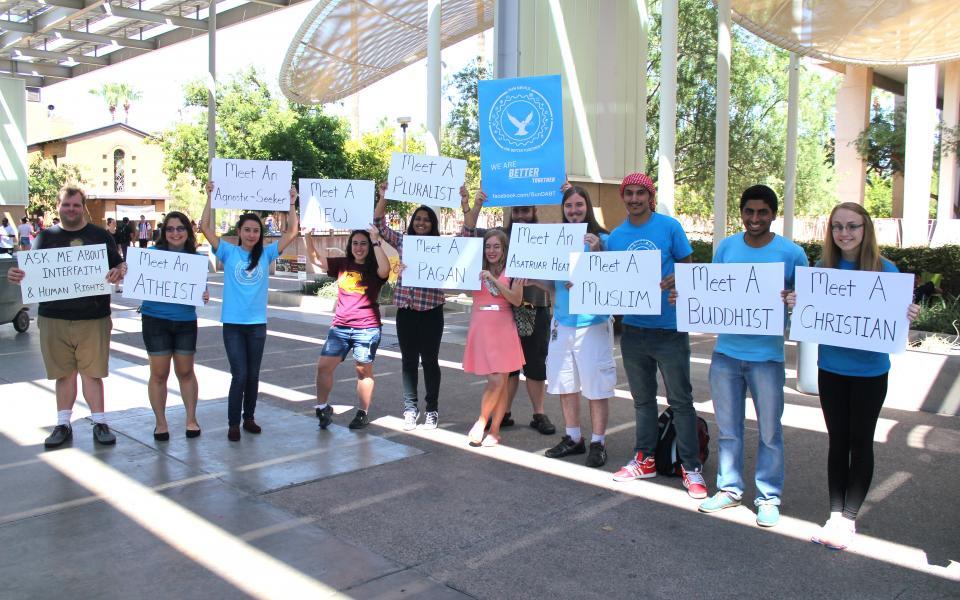
Sun Devils Are Better Together (SunDABT), a university student group and URI Cooperation Circle, creates safe spaces for people to ask respectful questions about other religions by holding signs that read, "Meet a Muslim," "Meet a Jew," etc.
-
The URI global community celebrates UN World Interfaith Harmony Week (WIHW) in the first week of February each year, with grassroots interfaith events in many communities.
- Campinas CC in Brazil hosted an interfaith gathering and invited representatives of multiple religious and faith beliefs to talk about life and death from the perspectives of their own traditions.
Search for Cooperation Circles (CCs) with a focus on Interfaith/Intercultural Understanding & Dialogue