
Director of Growth, Learning and Impact
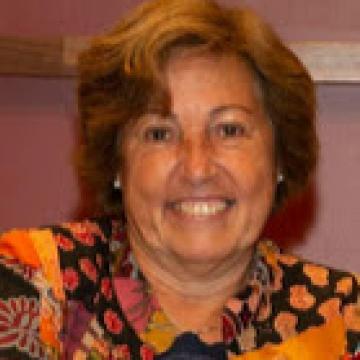
After playing many roles at URI from 1997 (volunteer, Interim Global Council, Latin America Regional Coordinator, Membership Support), María Crespo currently serves as the Director of Growth, Learning and Impact from her office in Buenos Aires Argentina. She is connected to and supports connections in the network. María provides facts and vision to the development of strategies for intentional growth at different levels, designing guidelines and processes that stimulate, inform, and orient expansion. She works with Global, Learning and Impact team at URI Global Support Office collaboratively nurturing Learning Eco-Systems where knowledge is exchanged and tools are provided and adapted to different contexts. With ED María identifies needs in regional development facilitating planning, budgeting and capacity building of staff and regional leadership teams. She offers input toward URI Impact Assessment aligned with Growth and Network Vitality and URI´s focus in Violence Prevention and Earth Restoration and Healing.
Maria is very involved in the Roman Catholic Church in Argentina. She has contributed to the formation of children, parents and schoolteachers and professors for many years. She is a Lay Collaborator of the Episcopal Commission on Ecumenism, Relations with Judaism, Islam and Other Religions in Argentina. She has been involved in many interfaith activities and programs at local, regional and global levels. She shares these experiences as work and travel permits as a Professor of Ecumenism and Interreligious Dialogue in Seminars in Buenos Aires Province. Maria is married and has five children.
In 1995, Bishop Swing became convinced that the world’s religions have a ‘vocation to be a force for good in the world.’ Over the next 5 years, thousands of people joined in a global appreciative process to create a shared vision of the world they wished to see and of a global interfaith organization that would engage people of all faiths, traditions, and backgrounds in making that vision a reality. This process culminated in the signing of the URI Charter, which establishes the three primary goals of the organization:
- Promote daily, enduring interfaith cooperation
- End Religiously Motivated Violence
- Create Cultures of Peace, Justice, and Healing for the Earth and All Living Beings
Over the past 25 years, under the guidance and leadership of Bishop Swing and as a result of his extraordinary vision, URI has built what is arguably the world’s largest network of interfaith activists. As of this writing, URI has 1178 self-organized member organizations (called “Cooperation Circles”, or ‘CCs’) in 112 countries and an additional 1100 individual members, which combined with the CCs extends the global network to 118 countries.
The basic structure of URI as well as its primary goals embody one of Guru Nanak’s teachings, specifically that religious dialogue helps to minimize religious conflict by cultivating the awareness that there is much to learn from the daily interaction with people of different faiths.
Another cornerstone of URI is its dedication to service at the grassroots level: Every CC commits to work in at least one of fourteen action areas, thus embodying Guru Nanak’s commitment to selfless service. Community service carried out by people of different faiths working together for the betterment of others is at the heart of everything that URI does.
From the very beginning, URI has valued the voices of young people, women, and members of indigenous communities. This, too, is in line with another of Guru Nanak’s core teachings, that of equality for all.
To learn more about URI and its vision and purpose, I encourage award committee members to read more about URI’s Preamble, Purpose and Principles, which, I believe, perfectly embody the vision and purpose of the Guru Nanak Prize.
At 25, URI has a solid foundation and the potential to significantly grow in size, scale, and impact.